
 January 29, 2026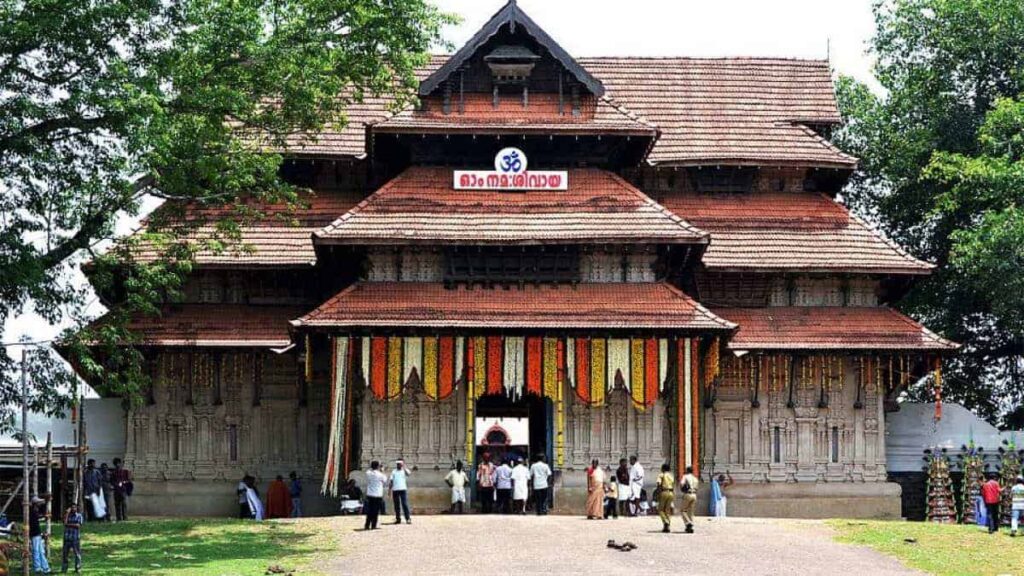
Important Days and Dates
- Maha Shivaratri: This is the most important festival for the presiding deity (Lord Shiva). The temple is illuminated with thousands of oil lamps (Lakshadeepam).
- Thrissur Pooram: April . While the temple doesn’t participate in the procession itself, it is the host venue for this world-famous “Mother of all Poorams.”
- Aanayoottu (Elephant Feeding): Typically held on the first day of the Malayalam month Karkidakam (mid-July). Devotees offer specially prepared food to dozens of unadorned elephants.
How to Reach
From Delhi to Vadakkunnathan Temple
- By Air: Fly from Indira Gandhi International Airport (DEL) to Cochin International Airport (COK). From the airport, Thrissur is about 55 km away. You can take a taxi (1.5 hours) or a bus.
- By Train: Several direct trains like the Kerala Express or Mangala Lakshadweep Express run from New Delhi/H. Nizamuddin to Thrissur (TCR). The journey takes approximately 40–45 hours.
- Local: The temple is just 1 km from Thrissur Railway Station/Bus Stand
From Ahmedabad to Vadakkunnathan Temple
- By Air: Fly from Sardar Vallabhbhai Patel International Airport (AMD) to Cochin International Airport (COK) (usually via Mumbai or Bangalore). Then travel 55 km by road to Thrissur
- By Train: Take the Hapa-Tirunelveli SF Express or Okha-Ernakulam Express directly to Thrissur (TCR). The journey takes about 30–35 hours.
History of the Temple
According to legend, the temple was founded by Lord Parasurama, the sixth avatar of Vishnu, who reclaimed Kerala from the sea. It is a masterpiece of Kerala’s indigenous architecture, featuring a massive Koothambalam (temple theatre) and 17th-century murals. In 2015, it received the UNESCO Asia-Pacific Award for Cultural Heritage Conservation.
Main Poojas Performed
The temple follows a strict schedule of Vedically prescribed rituals.
-
- Neyyabhishekam (Ghee Pouring): The primary and most important ritual. The 16-foot Shiva Lingam is completely covered by layers of ghee offered over centuries. Remarkably, the ghee never melts or spoils.
- Usha Pooja: The morning pooja performed shortly after sunrise to awaken the deity’s energy.
- Ucha Pooja: The noon pooja, which is the most elaborate daily ritual before the temple closes for the afternoon.
- Athazha Pooja: The night pooja performed before the temple closes, offering “Athazham” (supper) to the Lord.
- Thripuka: A concluding ritual where the sanctum is filled with fragrant medicinal smoke.
Attire (Dressing Guidelines) for Pooja
The temple maintains a very traditional and strict dress code.
Men:
-
- Must wear a Mundu (Dhoti). They must remain bare-chested (shirts and vests are not allowed inside the inner wall).
Women:
-
- Must wear a Saree, Set-mundu, or Long Skirt (Pavadai). Salwar Kameez is generally permitted provided a dupatta is worn correctly, but traditional sarees are highly recommended.
Restrictions:
-
- No lungis, jeans, or western wear.
- Non-Hindus are strictly prohibited from entering the inner temple complex.
- Photography and mobile phones are strictly banned inside.
Official Websites
Temple Trust Website:
https://sreewadakkunathantemple.org/
Government/Board Website:
https://www.cochindevaswomboard.org/
Description
Important Days and Dates
- Maha Shivaratri: This is the most important festival for the presiding deity (Lord Shiva). The temple is illuminated with thousands of oil lamps (Lakshadeepam).
- Thrissur Pooram: April . While the temple doesn’t participate in the procession itself, it is the host venue for this world-famous “Mother of all Poorams.”
- Aanayoottu (Elephant Feeding): Typically held on the first day of the Malayalam month Karkidakam (mid-July). Devotees offer specially prepared food to dozens of unadorned elephants.
How to Reach
From Delhi to Vadakkunnathan Temple
- By Air: Fly from Indira Gandhi International Airport (DEL) to Cochin International Airport (COK). From the airport, Thrissur is about 55 km away. You can take a taxi (1.5 hours) or a bus.
- By Train: Several direct trains like the Kerala Express or Mangala Lakshadweep Express run from New Delhi/H. Nizamuddin to Thrissur (TCR). The journey takes approximately 40–45 hours.
- Local: The temple is just 1 km from Thrissur Railway Station/Bus Stand
From Ahmedabad to Vadakkunnathan Temple
- By Air: Fly from Sardar Vallabhbhai Patel International Airport (AMD) to Cochin International Airport (COK) (usually via Mumbai or Bangalore). Then travel 55 km by road to Thrissur
- By Train: Take the Hapa-Tirunelveli SF Express or Okha-Ernakulam Express directly to Thrissur (TCR). The journey takes about 30–35 hours.
History of the Temple
According to legend, the temple was founded by Lord Parasurama, the sixth avatar of Vishnu, who reclaimed Kerala from the sea. It is a masterpiece of Kerala’s indigenous architecture, featuring a massive Koothambalam (temple theatre) and 17th-century murals. In 2015, it received the UNESCO Asia-Pacific Award for Cultural Heritage Conservation.
Main Poojas Performed
The temple follows a strict schedule of Vedically prescribed rituals.
-
- Neyyabhishekam (Ghee Pouring): The primary and most important ritual. The 16-foot Shiva Lingam is completely covered by layers of ghee offered over centuries. Remarkably, the ghee never melts or spoils.
- Usha Pooja: The morning pooja performed shortly after sunrise to awaken the deity’s energy.
- Ucha Pooja: The noon pooja, which is the most elaborate daily ritual before the temple closes for the afternoon.
- Athazha Pooja: The night pooja performed before the temple closes, offering “Athazham” (supper) to the Lord.
- Thripuka: A concluding ritual where the sanctum is filled with fragrant medicinal smoke.
Attire (Dressing Guidelines) for Pooja
The temple maintains a very traditional and strict dress code.
Men:
-
- Must wear a Mundu (Dhoti). They must remain bare-chested (shirts and vests are not allowed inside the inner wall).
Women:
-
- Must wear a Saree, Set-mundu, or Long Skirt (Pavadai). Salwar Kameez is generally permitted provided a dupatta is worn correctly, but traditional sarees are highly recommended.
Restrictions:
-
- No lungis, jeans, or western wear.
- Non-Hindus are strictly prohibited from entering the inner temple complex.
- Photography and mobile phones are strictly banned inside.
Official Websites
Temple Trust Website:
https://sreewadakkunathantemple.org/
Government/Board Website:
https://www.cochindevaswomboard.org/