-
Sheetla Chaukiya Chandauli
-
 Jaunpur, Uttar Pradesh
 -
January 28, 2026
-
-
0.00

 January 28, 2026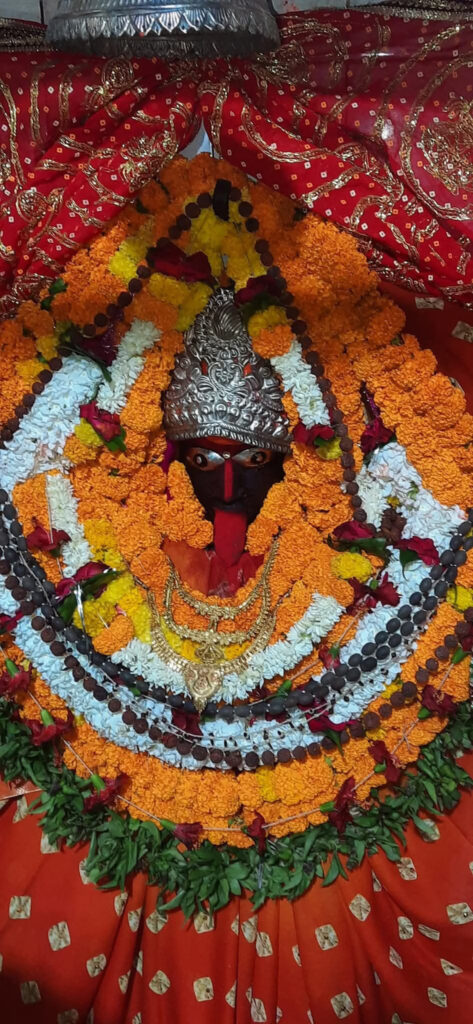
Important Days and Dates
- Sheetla Ashtami (Basant Panchami period / March-April)
- Mondays and Fridays are considered auspicious
- Navratri Festival
- Special gatherings during Chaitra and Vaishakh months
- Summer season is considered highly significant for worship
How to Reach
From Delhi to Shitala Mata Temple
- By Air: The nearest airport is Lal Bahadur Shastri International Airport, Varanasi, around 40 km away. From the airport, taxis are easily available.
- By Train: Trains from New Delhi Railway Station are available to Pt. Deen Dayal Upadhyaya Junction (Mughalsarai). From the junction, the temple is around 20 km and can be reached by auto or taxi.
- By Road: Delhi to Chandauli is approximately 800 km. Regular buses and private taxis are available up to Chandauli. From Chandauli city, local transport can be used to reach Sheetla Chaukiya.
From Ahmedabad to Shitala Mata Temple
- By Air: Flights are available from Ahmedabad to Varanasi (direct or connecting). From Varanasi Airport, the temple can be reached by taxi.
- By Train: Several trains are available from Ahmedabad Junction to Pt. Deen Dayal Upadhyaya Junction. From there, local transport can be used to reach the temple.
- By Road: Ahmedabad to Chandauli is approximately 1,100 km. Long-distance buses and taxis can be used to reach Chandauli district.
History of the Temple
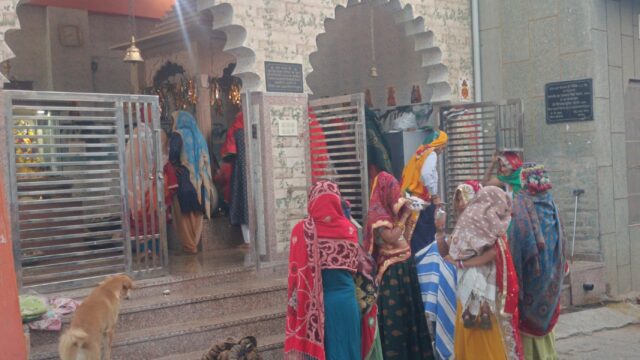
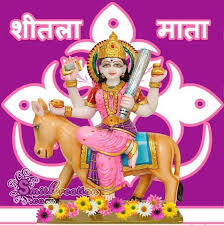
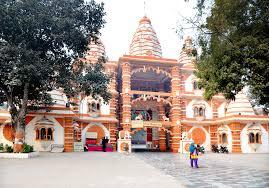
Shitala Mata Temple located at Sheetla Chaukiya in Chandauli district of Uttar Pradesh is a revered Hindu temple dedicated to Goddess Shitala. Goddess Shitala is worshipped as the deity who protects devotees from diseases, especially smallpox, chickenpox, and other infectious illnesses. The temple holds deep faith among local devotees as well as pilgrims from nearby districts.
The worship of Goddess Shitala has been prevalent since ancient times, particularly in North India. It is believed that sincere devotion to the Goddess brings relief from sufferings and ensures good health. The temple is especially crowded during the summer season when devotees perform special rituals and offer cooling items such as water, curd, and neem leaves to please the Goddess.
Main Poojas Performed
Note on Authenticity:
The rituals at the temple focus on the “cooling” nature of the Goddess (Sheetla means “the cool one”).
-
- Sheetla Mata Vrat/Siddhpeeth Puja (Primary): The most significant ritual where devotees offer “Basi” (cold/stale) food to the deity. This symbolizes the cessation of fire (heat) to appease the goddess of fever and heat-related ailments.
- Mundan Sanskar (Tonsure Ceremony): A very high-priority ritual performed frequently at this temple. Parents bring their children for their first haircut to seek the Goddess’s protection and long life for the child.
- Daily Aarti: Performed twice daily (Morning and Evening). The morning aarti usually takes place at sunrise, and the evening aarti at sunset, involving the chanting of the Sheetla Chalisa
- Sankalp Puja: Devotees perform this by taking a formal vow (Sankalp) with their name and gotra to seek relief from specific health issues or for the well-being of their family.
- Temple Timings: Opening Time: 5:00 AM Closing Time: 9:00 PM
Attire (Dressing Guidelines) for Pooja
While there is no “strictly enforced” uniform by a trust, the cultural norms of Chandauli and the temple tradition dictate the following:
Men:
-
- Traditional Indian wear such as Kurta-Pyjama or Dhoti is highly recommended for performing special poojas. Casual wear like trousers and shirts is acceptable for general darshan, but shorts should be avoided.
Women:
-
- Sarees or Salwar-Kameez with a dupatta are standard. It is customary to cover the head while standing before the sanctum sanctorum.
Restrictions:
-
- Non-leather items (belts, wallets) should be kept outside the main shrine area.
Official Websites
Information regarding state-managed temples in Kangra is typically hosted by the district administration.
Government Website:
https://chandauli.nic.in/
Temple Trust:
Most local administration and temple activities are managed by local committees; an official global “Trust” website is not currently available for this specific branch in Chandauli.
Description
Important Days and Dates
- Sheetla Ashtami (Basant Panchami period / March-April)
- Mondays and Fridays are considered auspicious
- Navratri Festival
- Special gatherings during Chaitra and Vaishakh months
- Summer season is considered highly significant for worship
How to Reach
From Delhi to Shitala Mata Temple
- By Air: The nearest airport is Lal Bahadur Shastri International Airport, Varanasi, around 40 km away. From the airport, taxis are easily available.
- By Train: Trains from New Delhi Railway Station are available to Pt. Deen Dayal Upadhyaya Junction (Mughalsarai). From the junction, the temple is around 20 km and can be reached by auto or taxi.
- By Road: Delhi to Chandauli is approximately 800 km. Regular buses and private taxis are available up to Chandauli. From Chandauli city, local transport can be used to reach Sheetla Chaukiya.
From Ahmedabad to Shitala Mata Temple
- By Air: Flights are available from Ahmedabad to Varanasi (direct or connecting). From Varanasi Airport, the temple can be reached by taxi.
- By Train: Several trains are available from Ahmedabad Junction to Pt. Deen Dayal Upadhyaya Junction. From there, local transport can be used to reach the temple.
- By Road: Ahmedabad to Chandauli is approximately 1,100 km. Long-distance buses and taxis can be used to reach Chandauli district.
History of the Temple
Shitala Mata Temple located at Sheetla Chaukiya in Chandauli district of Uttar Pradesh is a revered Hindu temple dedicated to Goddess Shitala. Goddess Shitala is worshipped as the deity who protects devotees from diseases, especially smallpox, chickenpox, and other infectious illnesses. The temple holds deep faith among local devotees as well as pilgrims from nearby districts.
The worship of Goddess Shitala has been prevalent since ancient times, particularly in North India. It is believed that sincere devotion to the Goddess brings relief from sufferings and ensures good health. The temple is especially crowded during the summer season when devotees perform special rituals and offer cooling items such as water, curd, and neem leaves to please the Goddess.
Main Poojas Performed
Note on Authenticity:
The rituals at the temple focus on the “cooling” nature of the Goddess (Sheetla means “the cool one”).
-
- Sheetla Mata Vrat/Siddhpeeth Puja (Primary): The most significant ritual where devotees offer “Basi” (cold/stale) food to the deity. This symbolizes the cessation of fire (heat) to appease the goddess of fever and heat-related ailments.
- Mundan Sanskar (Tonsure Ceremony): A very high-priority ritual performed frequently at this temple. Parents bring their children for their first haircut to seek the Goddess’s protection and long life for the child.
- Daily Aarti: Performed twice daily (Morning and Evening). The morning aarti usually takes place at sunrise, and the evening aarti at sunset, involving the chanting of the Sheetla Chalisa
- Sankalp Puja: Devotees perform this by taking a formal vow (Sankalp) with their name and gotra to seek relief from specific health issues or for the well-being of their family.
- Temple Timings: Opening Time: 5:00 AM Closing Time: 9:00 PM
Attire (Dressing Guidelines) for Pooja
While there is no “strictly enforced” uniform by a trust, the cultural norms of Chandauli and the temple tradition dictate the following:
Men:
-
- Traditional Indian wear such as Kurta-Pyjama or Dhoti is highly recommended for performing special poojas. Casual wear like trousers and shirts is acceptable for general darshan, but shorts should be avoided.
Women:
-
- Sarees or Salwar-Kameez with a dupatta are standard. It is customary to cover the head while standing before the sanctum sanctorum.
Restrictions:
-
- Non-leather items (belts, wallets) should be kept outside the main shrine area.
Official Websites
Information regarding state-managed temples in Kangra is typically hosted by the district administration.
Government Website:
https://chandauli.nic.in/
Temple Trust:
Most local administration and temple activities are managed by local committees; an official global “Trust” website is not currently available for this specific branch in Chandauli.