-
Sarnath
-
 Uttar Pradesh, Varanasi
 -
December 19, 2025
-
-
0.00

 December 19, 2025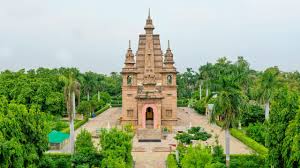
Important Days and Dates
- Buddha Purnima: The most significant festival celebrated in Sarnath, marking the birth, enlightenment, and Mahaparinirvana of Lord Buddha.
- Ashoka’s Dhammachakra Day:Celebrated annually to commemorate Emperor Ashoka’s contributions.
- Various Buddhist festivals observed by international monasteries throughout the year.
Delhi to Sarnath
- By Air: Delhi → Varanasi Airport; Sarnath is 25–30 km by road.
- By Train: New Delhi → Varanasi Junction / Manduadih.
- By Road: Approx. 850–900 km via NH19.
Ahmedabad to Sarnath
- By Air: Ahmedabad → Varanasi Airport; 25–30 km by road.
- >By Train: Ahmedabad Junction → Varanasi Junction.
- >By Road: Approx. 1,450–1,500 km via NH27 & NH19.
History of Sarnath
Sarnath, located near Varanasi in Uttar Pradesh, is one of the holiest Buddhist pilgrimage sites. After attaining enlightenment in Bodh Gaya, Lord Buddha delivered his first sermon at Sarnath in the Deer Park, also known as ‘Dhammachakrapravartana’—the turning of the wheel of Dharma. This marked the beginning of the Buddhist Sangha.
Emperor Ashoka visited Sarnath and erected the famous Ashoka Pillar with the Lion Capital, which today serves as the National Emblem of India. Over centuries, Sarnath became a major center of learning, with monasteries, stupas, and universities flourishing under Buddhist patronage.
Important archaeological remains include the Dhamek Stupa, Chaukhandi Stupa, Ashoka Pillar, and the Sarnath Archaeological Museum, which preserves numerous artifacts from ancient Buddhist history.
- Daily Buddha Puja & Chanting:Morning and evening chanting of Buddhist sutras led by monks.
- Morning Meditation: Silent meditation sessions at sunrise.
- Evening Prayer Ceremony: Group chanting and lamp offerings.
- Relic Veneration:Display and worship of Buddha relics on specific festivals.
Important Days & Timings
- Kartik Purnima:Annual exhibition of sacred Buddha relics.
- Daily Prayers:Morning (~6–7 AM) and Evening (~4–5 PM).
Attire Guidelines
- Men:Full-length trousers, shirts or kurta; modest clothing.
- Women:Saree, salwar-kameez, or modest dresses; shoulders and legs covered.
- Footwear must be removed before entering prayer halls.
Official Websites
-
Maha Bodhi Society of India:
https://mbsiindia.org/ -
UP Tourism – Mulagandha Kuti Vihar:
https://uptourism.gov.in/en/post/mulagandha-kuti-vihar
Description
Important Days and Dates
- Buddha Purnima: The most significant festival celebrated in Sarnath, marking the birth, enlightenment, and Mahaparinirvana of Lord Buddha.
- Ashoka’s Dhammachakra Day:Celebrated annually to commemorate Emperor Ashoka’s contributions.
- Various Buddhist festivals observed by international monasteries throughout the year.
Delhi to Sarnath
- By Air: Delhi → Varanasi Airport; Sarnath is 25–30 km by road.
- By Train: New Delhi → Varanasi Junction / Manduadih.
- By Road: Approx. 850–900 km via NH19.
Ahmedabad to Sarnath
- By Air: Ahmedabad → Varanasi Airport; 25–30 km by road.
- >By Train: Ahmedabad Junction → Varanasi Junction.
- >By Road: Approx. 1,450–1,500 km via NH27 & NH19.
History of Sarnath
Sarnath, located near Varanasi in Uttar Pradesh, is one of the holiest Buddhist pilgrimage sites. After attaining enlightenment in Bodh Gaya, Lord Buddha delivered his first sermon at Sarnath in the Deer Park, also known as ‘Dhammachakrapravartana’—the turning of the wheel of Dharma. This marked the beginning of the Buddhist Sangha.
Emperor Ashoka visited Sarnath and erected the famous Ashoka Pillar with the Lion Capital, which today serves as the National Emblem of India. Over centuries, Sarnath became a major center of learning, with monasteries, stupas, and universities flourishing under Buddhist patronage.
Important archaeological remains include the Dhamek Stupa, Chaukhandi Stupa, Ashoka Pillar, and the Sarnath Archaeological Museum, which preserves numerous artifacts from ancient Buddhist history.
- Daily Buddha Puja & Chanting:Morning and evening chanting of Buddhist sutras led by monks.
- Morning Meditation: Silent meditation sessions at sunrise.
- Evening Prayer Ceremony: Group chanting and lamp offerings.
- Relic Veneration:Display and worship of Buddha relics on specific festivals.
Important Days & Timings
- Kartik Purnima:Annual exhibition of sacred Buddha relics.
- Daily Prayers:Morning (~6–7 AM) and Evening (~4–5 PM).
Attire Guidelines
- Men:Full-length trousers, shirts or kurta; modest clothing.
- Women:Saree, salwar-kameez, or modest dresses; shoulders and legs covered.
- Footwear must be removed before entering prayer halls.
Official Websites
-
Maha Bodhi Society of India:
https://mbsiindia.org/ -
UP Tourism – Mulagandha Kuti Vihar:
https://uptourism.gov.in/en/post/mulagandha-kuti-vihar