-
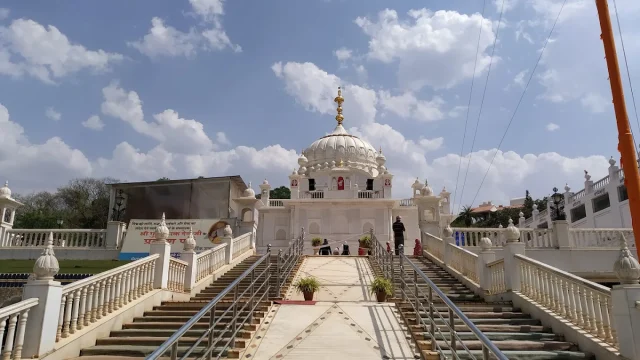
Gurdwara Hemkund Sahib
-
 Chamoli, Uttarakhand
 -
January 20, 2026
-
-
0.00

 January 20, 2026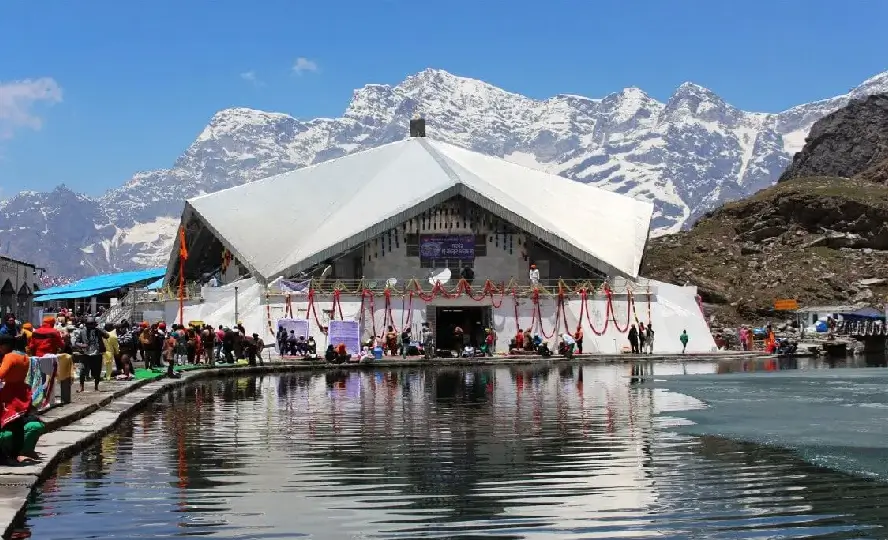
Important Days and Dates
- Opening Period: The Gurdwara is generally open from May to October every year, depending on weather conditions.
- Closing Period: It usually closes in October due to heavy snowfall.
- Gurpurab of Guru Gobind Singh Ji: Celebrated with special prayers, as the site is associated with Guru Gobind Singh Ji.
- Peak Pilgrimage Months: June, July, and August.
How to Reach
Delhi to Gurdwara Hemkund Sahib
By Air:
- Take a flight from Delhi to Dehradun (Jolly Grant Airport). From Dehradun, travel by road to Govindghat via Rishikesh and Joshimath.
By Train:
- Take a train from Delhi to Rishikesh or Haridwar. From there, proceed by road to Govindghat.
By Road:
- Delhi → Haridwar → Rishikesh → Joshimath → Govindghat. From Govindghat, a trek of about 6 km leads to Ghangaria, followed by another 6 km trek to Hemkund Sahib.
Ahmedabad to Gurdwara Hemkund Sahib
By Air:
- Fly from Ahmedabad to Dehradun (via Delhi). Continue by road to Govindghat.
By Train:
- Take a train from Ahmedabad to Haridwar or Rishikesh. Then travel by road to Govindghat.
By Road:
- Ahmedabad → Delhi → Haridwar → Rishikesh → Joshimath → Govindghat, followed by trekking.
About History of the Temple
Gurdwara Hemkund Sahib is one of the most sacred Sikh pilgrimage sites, located at an altitude of about 4,632 meters in the Chamoli district of Uttarakhand. The site is associated with Guru Gobind Singh Ji, the tenth Sikh Guru. In his autobiographical work, the ‘Bachitra Natak’, Guru Gobind Singh Ji mentioned meditating at a serene mountain lake surrounded by seven peaks, which is believed to be Hemkund Sahib.
The modern discovery of Hemkund Sahib is credited to Pandit Tara Singh Narotam in the early 20th century, who identified the location based on ancient Sikh scriptures. The construction of the present Gurdwara began in the 1960s and was completed with the support of the Indian Army, local residents, and Sikh volunteers.
Hemkund Sahib stands as a symbol of devotion, courage, and spiritual dedication, attracting thousands of pilgrims every year despite its challenging terrain and harsh climatic conditions.
Description
Important Days and Dates
- Opening Period: The Gurdwara is generally open from May to October every year, depending on weather conditions.
- Closing Period: It usually closes in October due to heavy snowfall.
- Gurpurab of Guru Gobind Singh Ji: Celebrated with special prayers, as the site is associated with Guru Gobind Singh Ji.
- Peak Pilgrimage Months: June, July, and August.
How to Reach
Delhi to Gurdwara Hemkund Sahib
By Air:
- Take a flight from Delhi to Dehradun (Jolly Grant Airport). From Dehradun, travel by road to Govindghat via Rishikesh and Joshimath.
By Train:
- Take a train from Delhi to Rishikesh or Haridwar. From there, proceed by road to Govindghat.
By Road:
- Delhi → Haridwar → Rishikesh → Joshimath → Govindghat. From Govindghat, a trek of about 6 km leads to Ghangaria, followed by another 6 km trek to Hemkund Sahib.
Ahmedabad to Gurdwara Hemkund Sahib
By Air:
- Fly from Ahmedabad to Dehradun (via Delhi). Continue by road to Govindghat.
By Train:
- Take a train from Ahmedabad to Haridwar or Rishikesh. Then travel by road to Govindghat.
By Road:
- Ahmedabad → Delhi → Haridwar → Rishikesh → Joshimath → Govindghat, followed by trekking.
About History of the Temple
Gurdwara Hemkund Sahib is one of the most sacred Sikh pilgrimage sites, located at an altitude of about 4,632 meters in the Chamoli district of Uttarakhand. The site is associated with Guru Gobind Singh Ji, the tenth Sikh Guru. In his autobiographical work, the ‘Bachitra Natak’, Guru Gobind Singh Ji mentioned meditating at a serene mountain lake surrounded by seven peaks, which is believed to be Hemkund Sahib.
The modern discovery of Hemkund Sahib is credited to Pandit Tara Singh Narotam in the early 20th century, who identified the location based on ancient Sikh scriptures. The construction of the present Gurdwara began in the 1960s and was completed with the support of the Indian Army, local residents, and Sikh volunteers.
Hemkund Sahib stands as a symbol of devotion, courage, and spiritual dedication, attracting thousands of pilgrims every year despite its challenging terrain and harsh climatic conditions.