
 December 20, 2025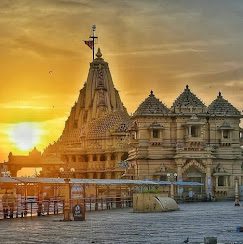
Important Days and Dates
- Janmashtami – The biggest festival celebrated with grand rituals and cultural events.
- Holi and Diwali – Celebrated with devotion and special pujas.
- Kartik Purnima – Considered highly auspicious for darshan.
- Akshaya Tritiya – Special offerings and rituals are performed.
- Daily Mangla Aarti – Famous early morning aarti that attracts many devotees.
How to Reach
Delhi to Dwarkadhish Temple – Dwarka:
- By Air: Nearest airport is Jamnagar Airport (about 130 km from Dwarka). Regular flights operate from Delhi to Jamnagar. From the airport, taxis and buses are available.
- By Road: Distance is around 1,400 km. Route passes through Jaipur – Udaipur – Ahmedabad – Jamnagar – Dwarka.
Ahmedabad to Dwarkadhish Temple – Dwarka:
- By Air: Fly from Ahmedabad to Jamnagar Airport, then travel 130 km by road to Dwarka.
- By Train: Direct trains available from Ahmedabad to Dwarka, taking around 6–8 hours.
- By Road: Approximately 450 km. Route: Ahmedabad – Rajkot – Jamnagar – Dwarka. Regular buses and private taxis are available.
History of the Temple
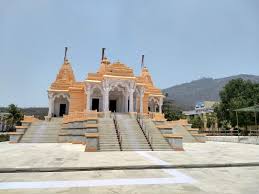
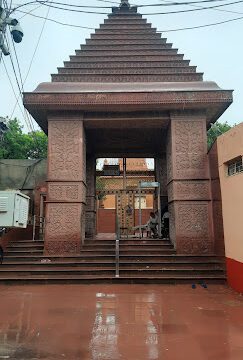
The Dwarkadhish Temple, also known as the Jagat Mandir, is one of the most sacred Hindu temples dedicated to Lord Krishna, worshipped here as “Dwarkadhish” or “King of Dwarka.” The temple is believed to be over 2,500 years old, originally built by Lord Krishna’s grandson, Vajranabh. The present-day structure is a 16th-century reconstruction after earlier structures were damaged over centuries.
The temple stands majestically on the Arabian Sea coast with a five-storied structure supported by intricately carved pillars reflecting the Chalukya architectural style. It is one of the Char Dham pilgrimage sites and a major part of the Sapta Puri (seven holy cities of India). The temple’s flag, changed five times a day, is one of its most prominent features, symbolizing Krishna’s royalty.
Dwarka itself is believed to be the ancient kingdom of Krishna, submerged after his departure from the earth. The temple holds immense significance for devotees worldwide and stands as a beacon of spiritual heritage.
Description
Important Days and Dates
- Janmashtami – The biggest festival celebrated with grand rituals and cultural events.
- Holi and Diwali – Celebrated with devotion and special pujas.
- Kartik Purnima – Considered highly auspicious for darshan.
- Akshaya Tritiya – Special offerings and rituals are performed.
- Daily Mangla Aarti – Famous early morning aarti that attracts many devotees.
How to Reach
Delhi to Dwarkadhish Temple – Dwarka:
- By Air: Nearest airport is Jamnagar Airport (about 130 km from Dwarka). Regular flights operate from Delhi to Jamnagar. From the airport, taxis and buses are available. <liBy Train: Dwarka Railway Station is well connected to Delhi via trains such as the Delhi – Dwarka Express.
- By Road: Distance is around 1,400 km. Route passes through Jaipur – Udaipur – Ahmedabad – Jamnagar – Dwarka.
Ahmedabad to Dwarkadhish Temple – Dwarka:
- By Air: Fly from Ahmedabad to Jamnagar Airport, then travel 130 km by road to Dwarka.
- By Train: Direct trains available from Ahmedabad to Dwarka, taking around 6–8 hours.
- By Road: Approximately 450 km. Route: Ahmedabad – Rajkot – Jamnagar – Dwarka. Regular buses and private taxis are available.
History of the Temple
The Dwarkadhish Temple, also known as the Jagat Mandir, is one of the most sacred Hindu temples dedicated to Lord Krishna, worshipped here as “Dwarkadhish” or “King of Dwarka.” The temple is believed to be over 2,500 years old, originally built by Lord Krishna’s grandson, Vajranabh. The present-day structure is a 16th-century reconstruction after earlier structures were damaged over centuries.
The temple stands majestically on the Arabian Sea coast with a five-storied structure supported by intricately carved pillars reflecting the Chalukya architectural style. It is one of the Char Dham pilgrimage sites and a major part of the Sapta Puri (seven holy cities of India). The temple’s flag, changed five times a day, is one of its most prominent features, symbolizing Krishna’s royalty.
Dwarka itself is believed to be the ancient kingdom of Krishna, submerged after his departure from the earth. The temple holds immense significance for devotees worldwide and stands as a beacon of spiritual heritage.