
 January 27, 2026
Important Days and Dates
While the temple is open daily, specific days are considered highly auspicious for Goddess Chehar Maa:
- Tuesdays and Sundays: These are the most prominent days when devotees flock to the temple for special prayers and Aarti
- Navratri: Both Chaitra and Sharad Navratri are celebrated with great fervor. Special ceremonies and Havan are performed during these nine days.
- Purnima (Full Moon Day): Many devotees observe a fast and visit the temple on this day.
- Mataji’s Pragatya Din: The appearance day of the Goddess (traditionally associated with the main seat in Martoli) is celebrated by followers across all locations.
How to Reach
Delhi to Chehar Maa Temple (Udaipur)
- By Air: Fly from Indira Gandhi International Airport (DEL) to Maharana Pratap Airport (UDR) in Udaipur. From the airport, take a taxi or auto to the Savina/Savina Sabji Mandi area.
- By Train: Take the Mewar Express or Chetak Express from Delhi to Udaipur City Railway Station. The temple is approximately 3–5 km from the station; you can easily find an auto-rickshaw.
- By Road: Udaipur is well-connected via NH48. It is roughly a 12-hour drive (approx. 660 km).
Ahmedabad to Chehar Maa Temple (Udaipur)
- By Road (Recommended): Udaipur is very close to Ahmedabad (approx. 260 km). You can take a private car or an RSRTC/GSRTC bus. The journey takes about 4–5 hours via the Ahmedabad-Udaipur Highway (NH48).
- By Train: Several trains run daily between Ahmedabad (ADI) and Udaipur City (UDZ), including the Asarva – Udaipur City Intercity.
- Local Direction: Once in Udaipur, head toward the Savina Railway Crossing or Savina Sabji Mandi to locate the temple.
History of the Temple
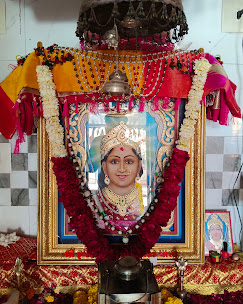
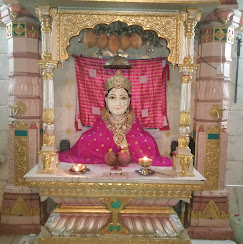
The history of Chehar Maa is deeply rooted in the folklore of Northern Gujarat. She is often referred to as Kesar Bhavani.
Origin: According to legend, the Goddess appeared approximately 900 years ago in the village of Martoli (Gujarat) to protect her devotees. She is considered a “silent” yet powerful protector who fulfills the wishes of those who pray with a pure heart.
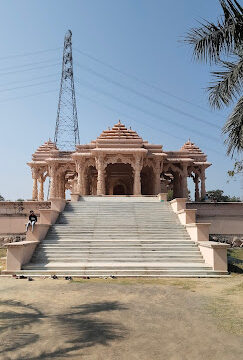
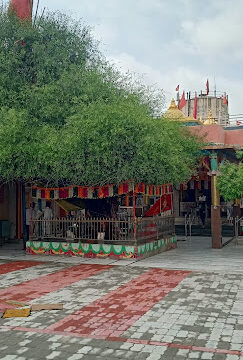
Expansion to Udaipur: The temple in Udaipur was established by the local devotee community (primarily those with roots in Gujarat or Rajasthan’s border regions) to provide a local place of worship for the Goddess. While it is a modern structure compared to the ancient seat in Martoli, it follows the same Vedic rituals and traditions.
Main Poojas Performed
The rituals at the temple follow the Shakta tradition, focusing on the feminine divine energy.
-
- Daily Mangla & Sandhya Aarti (Highest Priority): The most vital rituals are the morning (Mangla) and evening (Sandhya) Aartis. These involve the lighting of lamps and the chanting of stotrams to awaken and then retire the deity for the day.
- Maha Aarti: Performed on special occasions and every Sunday. This is a larger-scale ritual involving traditional musical instruments (Dhol/Nagada) and a larger gathering of devotees.
- Chunari Manorath: A special offering where devotees present a traditional “Chunari” (sacred scarf) and Shringar (decorations) to the Mother as a mark of gratitude or seeking a boon.
- Naivedya / Bhog Offering: The daily offering of “Sukhadi” or “Lapsi” (traditional sweet dishes) and fruits to the deity, which is later distributed as Prasad.
Attire (Dressing Guidelines) for Pooja
While there is no strict “uniform,” the temple maintains a traditional environment.
Men:
-
- Traditional Indian wear such as Dhoti-Kurta or Kurta-Pyjama.
- Modest trousers and shirts are acceptable.
Women:
-
- Saree or Salwar-Kameez with a Dupatta
General:
-
- It is culturally respectful to avoid short skirts, sleeveless tops, or overly distressed clothing inside the sanctum.
- Footwear must be removed at the designated stands before entering the temple premises.
Official Websites
Government Website:
Information regarding major temples in the region can often be found on the Rajasthan Devasthan Department website.
Temple Trust:
As of early 2026, many local Chehar Maa shrines operate through community trusts that share updates via social media groups rather than a dedicated “.org” domain. For the main branch in Martoli (to which the Udaipur shrine is spiritually linked), the central portal is cheharmaa.com.
Description
Important Days and Dates
While the temple is open daily, specific days are considered highly auspicious for Goddess Chehar Maa:
- Tuesdays and Sundays: These are the most prominent days when devotees flock to the temple for special prayers and Aarti
- Navratri: Both Chaitra and Sharad Navratri are celebrated with great fervor. Special ceremonies and Havan are performed during these nine days.
- Purnima (Full Moon Day): Many devotees observe a fast and visit the temple on this day.
- Mataji’s Pragatya Din: The appearance day of the Goddess (traditionally associated with the main seat in Martoli) is celebrated by followers across all locations.
How to Reach
Delhi to Chehar Maa Temple (Udaipur)
- By Air: Fly from Indira Gandhi International Airport (DEL) to Maharana Pratap Airport (UDR) in Udaipur. From the airport, take a taxi or auto to the Savina/Savina Sabji Mandi area.
- By Train: Take the Mewar Express or Chetak Express from Delhi to Udaipur City Railway Station. The temple is approximately 3–5 km from the station; you can easily find an auto-rickshaw.
- By Road: Udaipur is well-connected via NH48. It is roughly a 12-hour drive (approx. 660 km).
Ahmedabad to Chehar Maa Temple (Udaipur)
- By Road (Recommended): Udaipur is very close to Ahmedabad (approx. 260 km). You can take a private car or an RSRTC/GSRTC bus. The journey takes about 4–5 hours via the Ahmedabad-Udaipur Highway (NH48).
- By Train: Several trains run daily between Ahmedabad (ADI) and Udaipur City (UDZ), including the Asarva – Udaipur City Intercity.
- Local Direction: Once in Udaipur, head toward the Savina Railway Crossing or Savina Sabji Mandi to locate the temple.
History of the Temple
The history of Chehar Maa is deeply rooted in the folklore of Northern Gujarat. She is often referred to as Kesar Bhavani.
Origin: According to legend, the Goddess appeared approximately 900 years ago in the village of Martoli (Gujarat) to protect her devotees. She is considered a “silent” yet powerful protector who fulfills the wishes of those who pray with a pure heart.
Expansion to Udaipur: The temple in Udaipur was established by the local devotee community (primarily those with roots in Gujarat or Rajasthan’s border regions) to provide a local place of worship for the Goddess. While it is a modern structure compared to the ancient seat in Martoli, it follows the same Vedic rituals and traditions.
Main Poojas Performed
The rituals at the temple follow the Shakta tradition, focusing on the feminine divine energy.
-
- Daily Mangla & Sandhya Aarti (Highest Priority): The most vital rituals are the morning (Mangla) and evening (Sandhya) Aartis. These involve the lighting of lamps and the chanting of stotrams to awaken and then retire the deity for the day.
- Maha Aarti: Performed on special occasions and every Sunday. This is a larger-scale ritual involving traditional musical instruments (Dhol/Nagada) and a larger gathering of devotees.
- Chunari Manorath: A special offering where devotees present a traditional “Chunari” (sacred scarf) and Shringar (decorations) to the Mother as a mark of gratitude or seeking a boon.
- Naivedya / Bhog Offering: The daily offering of “Sukhadi” or “Lapsi” (traditional sweet dishes) and fruits to the deity, which is later distributed as Prasad.
Attire (Dressing Guidelines) for Pooja
While there is no strict “uniform,” the temple maintains a traditional environment.
Men:
-
- Traditional Indian wear such as Dhoti-Kurta or Kurta-Pyjama.
- Modest trousers and shirts are acceptable.
Women:
-
- Saree or Salwar-Kameez with a Dupatta
General:
-
- It is culturally respectful to avoid short skirts, sleeveless tops, or overly distressed clothing inside the sanctum.
- Footwear must be removed at the designated stands before entering the temple premises.
Official Websites
Government Website:
Information regarding major temples in the region can often be found on the Rajasthan Devasthan Department website.
Temple Trust:
As of early 2026, many local Chehar Maa shrines operate through community trusts that share updates via social media groups rather than a dedicated “.org” domain. For the main branch in Martoli (to which the Udaipur shrine is spiritually linked), the central portal is cheharmaa.com.