
 January 29, 2026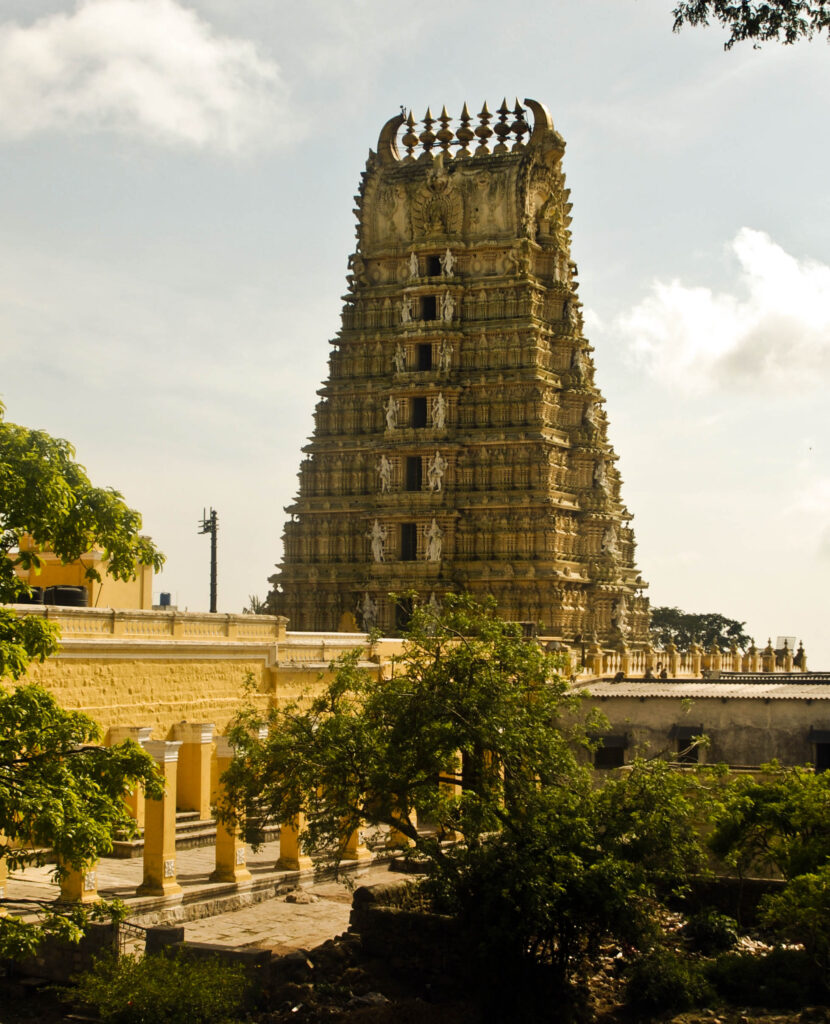
The temple vibrates with energy during specific lunar months and festivals:
Important Days and Dates
- Navaratri (Mysuru Dasara): The most significant festival. For nine days, the Goddess is decorated in nine different avatars (Navadurgas). The 7th day (Kalaratri) is particularly special as royal jewels are brought from the treasury to adorn the idol.
- Ashadha Shukravara: Fridays during the Hindu month of Ashadha (July–August) are considered extremely auspicious. Thousands of devotees climb the hills during this time.
- Chamundi Jayanthi (Vardhanthi): The birth anniversary of the Goddess, usually occurring in the month of Ashadha. A grand chariot procession (Rathotsava) is held.
- Fridays: Every Friday is special, with the temple opening earlier (around 5:00 AM) and performing extended rituals.
How to Reach
Mysuru is well-connected to major Indian cities. The temple is approximately 13 km from the Mysuru city center.
From Delhi (approx. 2,400 km):
- By Air: Fly from Indira Gandhi International Airport (DEL) to Bengaluru (BLR). From Bengaluru, you can take the KSRTC “Flybus,” a train (Shatabdi/Vande Bharat), or a private taxi to Mysuru (3–4 hours). There are also limited direct flights from Delhi to Mysuru (MYQ).
- By Train: Direct trains like the Swarna Jayanti Express run from Delhi to Mysuru, though the journey takes nearly 45–48 hours.
From Ahmedabad (approx. 1,500 km):
- By Air: Fly from Sardar Vallabhbhai Patel International Airport (AMD) to Bengaluru (BLR), then proceed to Mysuru by road or rail.
- By Train: The Hampi Express or other connecting trains via Bengaluru are common routes.
Local Tip: Once in Mysuru, you can take a KSRTC bus (Route 201) from the City Bus Stand, which goes directly to the hilltop every 20 minutes.
History of the Temple
The temple’s history spans over a millennium:
Origins: The original shrine is believed to have been built in the 12th century by the Hoysala rulers.
Royal Patronage: It became the family deity (Kula Devata) of the Wodeyar Dynasty in 1399. The Maharajas of Mysuru have made massive contributions over centuries.
Key Features: The iconic 7-tier Raja Gopura (entrance tower) was built by Maharaja Krishnaraja Wodeyar III in 1827.
The Nandi: Halfway up the hill sits a massive monolithic Nandi (Lord Shiva’s bull), carved from a single boulder in 1659 by Dodda Devaraja Wodeyar. It is one of the largest in India.
Main Poojas Performed
The rituals follow the ancient Agama traditions. Here they are in order of priority:
-
- Mahabhisheka: The primary and most sacred ritual. The idol is bathed with milk, curd, honey, ghee, and coconut water while Vedic hymns are chanted.
- Kumkumarchana : A special offering of vermilion (Kumkum) to the Goddess. It is highly sought after by devotees for protection and prosperity.
- Sahasranama Archana: Chanting of the 1000 names of the Goddess while offering flowers or sacred grains.
- Rathotsava (Evening) : A ritual involving the five traditional nectars, performed daily to invoke the Goddess’s grace.
Attire (Dressing Guidelines) for Pooja
While there isn’t a “uniform” mandated by law for general darshan, the temple authority strictly enforces a modest dress code to maintain sanctity:
Men:
-
- Recommended: : Traditional Dhoti (Veshti) with or without an upper cloth (Angavastram), or formal shirts and trousers.
- Prohibited: Bermudas, short pants, and sleeveless tops
Women:
-
- Saree, Half-saree, or Salwar Kameez with a Dupatta.
Restrictions:
-
- Mini-skirts, short dresses, or transparent/sleeveless attire
Official Websites
Karnataka Tourism (Govt):
https://karnatakatourism.org/en/attractions/chamundeshwari-temple
Temple Administration/Trust:
https://chamundeshwaritemple.in/
Description
The temple vibrates with energy during specific lunar months and festivals:
Important Days and Dates
- Navaratri (Mysuru Dasara): The most significant festival. For nine days, the Goddess is decorated in nine different avatars (Navadurgas). The 7th day (Kalaratri) is particularly special as royal jewels are brought from the treasury to adorn the idol.
- Ashadha Shukravara: Fridays during the Hindu month of Ashadha (July–August) are considered extremely auspicious. Thousands of devotees climb the hills during this time.
- Chamundi Jayanthi (Vardhanthi): The birth anniversary of the Goddess, usually occurring in the month of Ashadha. A grand chariot procession (Rathotsava) is held.
- Fridays: Every Friday is special, with the temple opening earlier (around 5:00 AM) and performing extended rituals.
How to Reach
Mysuru is well-connected to major Indian cities. The temple is approximately 13 km from the Mysuru city center.
From Delhi (approx. 2,400 km):
- By Air: Fly from Indira Gandhi International Airport (DEL) to Bengaluru (BLR). From Bengaluru, you can take the KSRTC “Flybus,” a train (Shatabdi/Vande Bharat), or a private taxi to Mysuru (3–4 hours). There are also limited direct flights from Delhi to Mysuru (MYQ).
- By Train: Direct trains like the Swarna Jayanti Express run from Delhi to Mysuru, though the journey takes nearly 45–48 hours.
From Ahmedabad (approx. 1,500 km):
- By Air: Fly from Sardar Vallabhbhai Patel International Airport (AMD) to Bengaluru (BLR), then proceed to Mysuru by road or rail.
- By Train: The Hampi Express or other connecting trains via Bengaluru are common routes.
Local Tip: Once in Mysuru, you can take a KSRTC bus (Route 201) from the City Bus Stand, which goes directly to the hilltop every 20 minutes.
History of the Temple
The temple’s history spans over a millennium:
Origins: The original shrine is believed to have been built in the 12th century by the Hoysala rulers.
Royal Patronage: It became the family deity (Kula Devata) of the Wodeyar Dynasty in 1399. The Maharajas of Mysuru have made massive contributions over centuries.
Key Features: The iconic 7-tier Raja Gopura (entrance tower) was built by Maharaja Krishnaraja Wodeyar III in 1827.
The Nandi: Halfway up the hill sits a massive monolithic Nandi (Lord Shiva’s bull), carved from a single boulder in 1659 by Dodda Devaraja Wodeyar. It is one of the largest in India.
Main Poojas Performed
The rituals follow the ancient Agama traditions. Here they are in order of priority:
-
- Mahabhisheka: The primary and most sacred ritual. The idol is bathed with milk, curd, honey, ghee, and coconut water while Vedic hymns are chanted.
- Kumkumarchana : A special offering of vermilion (Kumkum) to the Goddess. It is highly sought after by devotees for protection and prosperity.
- Sahasranama Archana: Chanting of the 1000 names of the Goddess while offering flowers or sacred grains.
- Rathotsava (Evening) : A ritual involving the five traditional nectars, performed daily to invoke the Goddess’s grace.
Attire (Dressing Guidelines) for Pooja
While there isn’t a “uniform” mandated by law for general darshan, the temple authority strictly enforces a modest dress code to maintain sanctity:
Men:
-
- Recommended: : Traditional Dhoti (Veshti) with or without an upper cloth (Angavastram), or formal shirts and trousers.
- Prohibited: Bermudas, short pants, and sleeveless tops
Women:
-
- Saree, Half-saree, or Salwar Kameez with a Dupatta.
Restrictions:
-
- Mini-skirts, short dresses, or transparent/sleeveless attire
Official Websites
Karnataka Tourism (Govt):
https://karnatakatourism.org/en/attractions/chamundeshwari-temple
Temple Administration/Trust:
https://chamundeshwaritemple.in/