
 December 20, 2025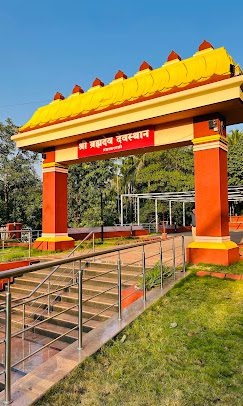
Important Days and Dates
No officially documented special festival days are published for this temple. Local devotees generally follow traditional Hindu festival dates, and temple-specific rituals are scheduled locally by the community.
How to Reach
Delhi to Brahma Temple – Nagoa, Goa:
- Travel from Delhi to Goa by flight or train.
- From Goa, go to Valpoi (Sattari region).
- From Valpoi, travel 6–7 km to Nagoa/Nagargao village to reach the Brahma Temple.
Ahmedabad to Brahma Temple – Nagoa, Goa:
- Travel from Ahmedabad to Goa by flight or train.
- From Goa, go to Valpoi (Sattari region).
- From Valpoi, travel 6–7 km to Nagoa/Nagargao village to reach the Brahma Temple.
History of the Temple
The Brahma Temple of Nagoa (also known as Brahma-Karmali Temple) is one of the very few temples in India dedicated to Lord Brahma. The black stone idol dates back to the Kadamba period (12th century). Originally located in Karmali village near Old Goa, the idol was moved to the Nagargao region during Portuguese rule to protect it. The temple preserves the ancient idol depicting Brahma in a Trimurti-like form, symbolizing Brahma, Vishnu, and Shiva.
Description
Important Days and Dates
No officially documented special festival days are published for this temple. Local devotees generally follow traditional Hindu festival dates, and temple-specific rituals are scheduled locally by the community.
How to Reach
Delhi to Brahma Temple – Nagoa, Goa:
- Travel from Delhi to Goa by flight or train.
- From Goa, go to Valpoi (Sattari region).
- From Valpoi, travel 6–7 km to Nagoa/Nagargao village to reach the Brahma Temple.
Ahmedabad to Brahma Temple – Nagoa, Goa:
- Travel from Ahmedabad to Goa by flight or train.
- From Goa, go to Valpoi (Sattari region).
- From Valpoi, travel 6–7 km to Nagoa/Nagargao village to reach the Brahma Temple.
History of the Temple
The Brahma Temple of Nagoa (also known as Brahma-Karmali Temple) is one of the very few temples in India dedicated to Lord Brahma. The black stone idol dates back to the Kadamba period (12th century). Originally located in Karmali village near Old Goa, the idol was moved to the Nagargao region during Portuguese rule to protect it. The temple preserves the ancient idol depicting Brahma in a Trimurti-like form, symbolizing Brahma, Vishnu, and Shiva.