
 February 2, 2026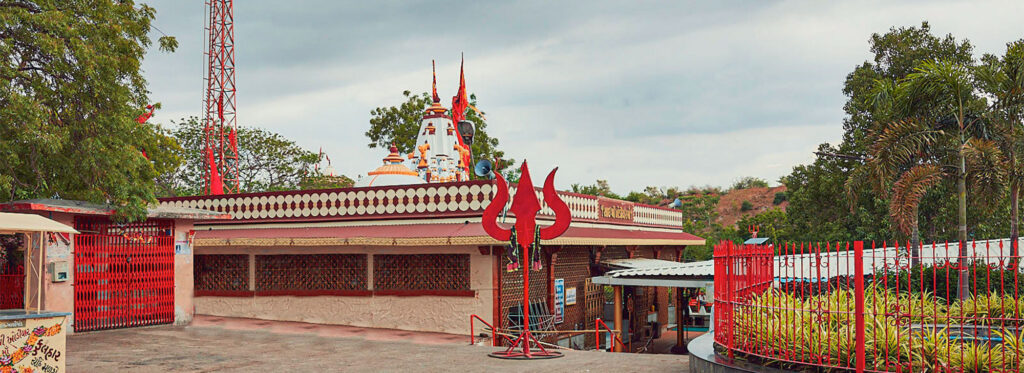
Important Days and Dates
The temple witnesses a massive influx of devotees during specific lunar dates and festivals:
- Navratri (Aso and Chaitra): The nine nights dedicated to the Goddess are the most significant.
- Maha Sud Jeth (Janmotsav): The appearance day (birthday) of Khodiyar Maa is celebrated with great pomp.
- Sundays and Tuesdays: These days are considered particularly auspicious for worshipping the Goddess.
- Full Moon Days (Poonam): Many devotees perform a Padayatra (walking pilgrimage) to the temple on every Poonam.
How to Reach
From Delhi to Rajpara
- By Air: Fly from Indira Gandhi International Airport (DEL) to Bhavnagar Airport (BHU). From the airport, the temple is approximately 18 km away and can be reached via taxi or local bus.
- By Train: Take a direct train (like the Bhavnagar Terminus Weekly SF) to Bhavnagar Terminus. From the station, it is a 15 km drive to Rajpara.
- By Road: It is a long drive (approx. 1,100 km). Most travelers prefer flying or taking a train to Ahmedabad first.
From Ahmedabad to Rajpara
- By Road: This is the most popular route (approx. 175 km). You can take a private cab or a GSRTC (State Transport) bus towards Bhavnagar. The journey takes about 3.5 to 4 hours.
- By Train: Several daily trains run between Ahmedabad and Bhavnagar.
- Note: The temple is located near Sihor, so any transport heading to Bhavnagar can drop you at the Sihor junction or the Rajpara diversion.
About History of the Temple
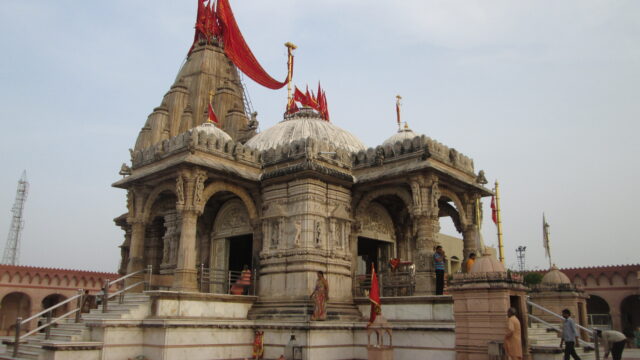
The temple’s history is deeply intertwined with Maharaja Wakhatsinghji, the ruler of Bhavnagar state in the late 18th century.
According to legend, the King was a great devotee and requested the Goddess to reside in his capital. Khodiyar Maa agreed to follow him on the condition that he must not look back to check if she was following. Near the current site of Rajpara, the King heard the sound of her anklets stop and turned around. Because he broke the pact, the Goddess halted there and established her seat.
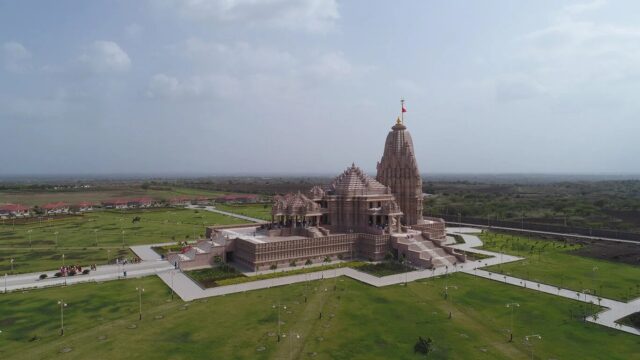
The temple is situated on the banks of a beautiful lake known as Tataniya Dharo, which is said to be the spot where the Goddess first appeared in this region.
Main Poojas Performed
The rituals at Rajpara are centered around the “Shakti” tradition.
- Aarti (Morning & Evening): The primary daily ritual. The Mangala Aarti (morning) and Sandhya Aarti (evening) are the spiritual highlights for visitors.
- Lapsi Bhog: This is the most important offering. Devotees offer Lapsi (a sweet dish made of broken wheat and jaggery) to the Goddess as a mark of gratitude for fulfilled vows.
- Chundadi Manorath: Offering a traditional decorative scarf (Chundadi) and jewelry to the idol of the Goddess.
- Srifal (Coconut) Offering: A standard ritual where a coconut is offered at the altar or tied in the temple premises to make a wish (Badha).
Attire (Dressing Guidelines)
While there is no rigid “uniform,” the temple maintains a traditional atmosphere.
Men:Recommended to wear ethnic Indian attire like Kurta-Pyjama or Dhoti. Avoid wearing shorts or revealing gym wear.
Women:Saree or Salwar Kameez with a Dupatta is highly recommended.
Restrictions:Footwear must be removed before entering the main temple complex. It is customary to cover one’s head during the Aarti as a sign of respect.
Official Websites
- Temple Trust:The temple is managed by the Shree Khodiyar Mandir Trust, Rajpara. While they do not always maintain a high-tech portal, official information is often routed through the Bhavnagar District Administration Website.
- Gujarat Tourism:Information regarding the temple’s significance and travel can be found on the Official Gujarat Tourism Portal.
Description
Important Days and Dates
The temple witnesses a massive influx of devotees during specific lunar dates and festivals:
- Navratri (Aso and Chaitra): The nine nights dedicated to the Goddess are the most significant.
- Maha Sud Jeth (Janmotsav): The appearance day (birthday) of Khodiyar Maa is celebrated with great pomp.
- Sundays and Tuesdays: These days are considered particularly auspicious for worshipping the Goddess.
- Full Moon Days (Poonam): Many devotees perform a Padayatra (walking pilgrimage) to the temple on every Poonam.
How to Reach
From Delhi to Rajpara
- By Air: Fly from Indira Gandhi International Airport (DEL) to Bhavnagar Airport (BHU). From the airport, the temple is approximately 18 km away and can be reached via taxi or local bus.
- By Train: Take a direct train (like the Bhavnagar Terminus Weekly SF) to Bhavnagar Terminus. From the station, it is a 15 km drive to Rajpara.
- By Road: It is a long drive (approx. 1,100 km). Most travelers prefer flying or taking a train to Ahmedabad first.
From Ahmedabad to Rajpara
- By Road: This is the most popular route (approx. 175 km). You can take a private cab or a GSRTC (State Transport) bus towards Bhavnagar. The journey takes about 3.5 to 4 hours.
- By Train: Several daily trains run between Ahmedabad and Bhavnagar.
- Note: The temple is located near Sihor, so any transport heading to Bhavnagar can drop you at the Sihor junction or the Rajpara diversion.
About History of the Temple
The temple’s history is deeply intertwined with Maharaja Wakhatsinghji, the ruler of Bhavnagar state in the late 18th century.
According to legend, the King was a great devotee and requested the Goddess to reside in his capital. Khodiyar Maa agreed to follow him on the condition that he must not look back to check if she was following. Near the current site of Rajpara, the King heard the sound of her anklets stop and turned around. Because he broke the pact, the Goddess halted there and established her seat.
The temple is situated on the banks of a beautiful lake known as Tataniya Dharo, which is said to be the spot where the Goddess first appeared in this region.
Main Poojas Performed
The rituals at Rajpara are centered around the “Shakti” tradition.
- Aarti (Morning & Evening): The primary daily ritual. The Mangala Aarti (morning) and Sandhya Aarti (evening) are the spiritual highlights for visitors.
- Lapsi Bhog: This is the most important offering. Devotees offer Lapsi (a sweet dish made of broken wheat and jaggery) to the Goddess as a mark of gratitude for fulfilled vows.
- Chundadi Manorath: Offering a traditional decorative scarf (Chundadi) and jewelry to the idol of the Goddess.
- Srifal (Coconut) Offering: A standard ritual where a coconut is offered at the altar or tied in the temple premises to make a wish (Badha).
Attire (Dressing Guidelines)
While there is no rigid “uniform,” the temple maintains a traditional atmosphere.
Men:Recommended to wear ethnic Indian attire like Kurta-Pyjama or Dhoti. Avoid wearing shorts or revealing gym wear.
Women:Saree or Salwar Kameez with a Dupatta is highly recommended.
Restrictions:Footwear must be removed before entering the main temple complex. It is customary to cover one’s head during the Aarti as a sign of respect.
Official Websites
- Temple Trust:The temple is managed by the Shree Khodiyar Mandir Trust, Rajpara. While they do not always maintain a high-tech portal, official information is often routed through the Bhavnagar District Administration Website.
- Gujarat Tourism:Information regarding the temple’s significance and travel can be found on the Official Gujarat Tourism Portal.