
 February 2, 2026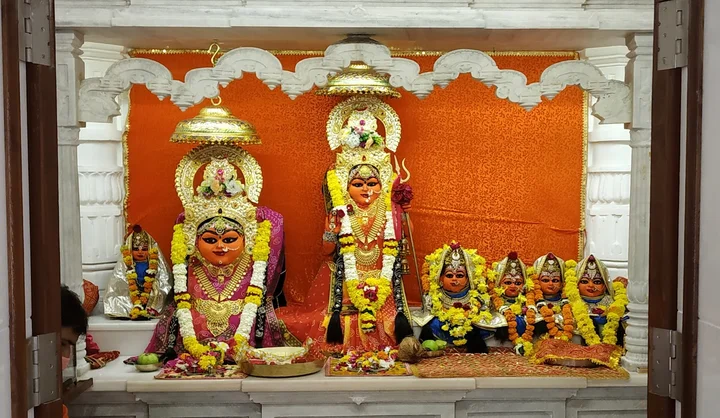
Important Days and Dates
The temple observes several days as highly auspicious, attracting a large number of devotees:
- Khodiyar Jayanti: The birth anniversary of Maa Khodiyar (usually falling in the Hindu month of Magha) is the most celebrated day at the temple.
- Karthika Masam: The entire Hindu lunar month of Karthika (Oct/Nov) is sacred. Mondays are particularly crowded with special rituals.
- Tuesdays and Sundays: These are considered the most auspicious days of the week for the Goddess, and the temple remains crowded with local devotees.
- Poonam (Full Moon Day): Many devotees visit the temple on full moon days to perform special prayers and seek blessings.
How to Reach
From Delhi to Temple
- By Air: Fly from Indira Gandhi International Airport (DEL) to Surat Airport (STV). From the airport, the temple is approximately 15–18 km away. You can hire a taxi or use local rickshaw services to reach Laldarwaja.
- By Train: Take a train from New Delhi (NDLS) or Hazrat Nizamuddin (NZM) to Surat Railway Station (ST). The temple is located within 3–4 km of the station, making it easily accessible via auto-rickshaws.
- By Road: Surat is well-connected via NH48. It is a long drive (approx. 1,150 km), usually taken via Jaipur and Ahmedabad.
From Ahmedabad to Temple
- By Train: Several express and intercity trains (like the Karnavati Express or Vande Bharat) run daily between Ahmedabad Junction (ADI) and Surat. The journey takes about 3 to 4 hours.
- By Bus: State transport (GSRTC) and private luxury buses operate frequently. You can get down at the Surat main bus station (Central Bus Station), which is very close to Laldarwaja.
- By Road: It is a 265 km drive via the NE1 (Ahmedabad-Vadodara Expressway) and NH48, taking roughly 4–5 hours.
About History of the Temple
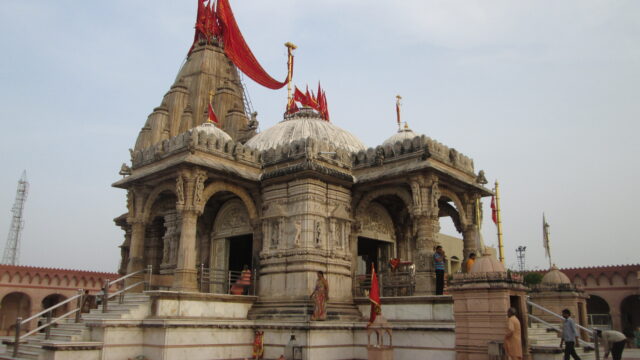
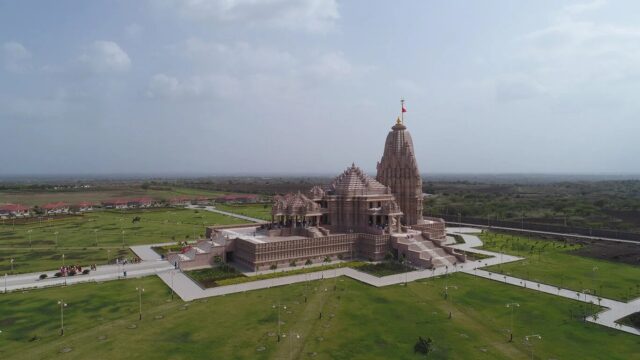
The temple at Laldarwaja is a localized representation of the original Khodiyar shrines found in Matel and Rajpara (Bhavnagar). According to legend, Goddess Khodiyar was born in the 7th century as Janbai, one of the seven sisters of the Charan community. She is depicted riding a crocodile (her vahana). The Laldarwaja temple was established to serve the growing population of devotees in Surat who could not frequently travel to the ancestral shrines in Saurashtra. Over the years, it has evolved from a small shrine into a prominent temple complex, known for its social and charitable activities in the Surat region.
Main Poojas Performed
The temple follows traditional Vedic and Gujarati rituals.
- Maha Aarti (Primary Pooja): Performed twice daily (morning and evening). It is the most significant ritual where devotees gather to witness the lamp ceremony and sing hymns in praise of the Goddess.
- Thaal: A ritual offering of food (Bhog) to the deity. This is performed daily before the afternoon closing and after the evening Aarti.
- Lapsi Naivedya: A special offering of Lapsi (a sweet broken-wheat dish), which is Maa Khodiyar’s favorite. Devotees often sponsor this as a thank-offering (Mannat).
- Chunari Manorath: Devotees offer a traditional red Chunari (scarf) and Shringar items to the Goddess to seek her protection and blessings.
Attire (Dressing Guidelines)
While there is no rigid “uniform,” the temple management and local customs encourage modest and traditional clothing:
Men:Recommended to wear Dhoti-Kurta or Kurta-Pajama. Formal shirts and trousers are also acceptable. Avoid wearing shorts or sleeveless gym wear.
Women:Recommended to wear Sarees or Salwar-Kameez with a dupatta. It is traditional to cover the head during the Aarti. Avoid wearing short skirts or revealing western outfits.
General Note:General Note: Footwear must be removed at the designated area outside the main temple sanctum.
Official Websites
- Government Website:
Gujarat Tourism – Khodiyar Mandir (General info on Khodiyar temples).
- Temple Trust:This specific local temple in Laldarwaja does not have a dedicated high-functioning website for online bookings, as it is managed by a local trust. For the primary seat of the Goddess, you may refer to Khodiyar Mandir Trust (Rajpara).
Description
Important Days and Dates
The temple observes several days as highly auspicious, attracting a large number of devotees:
- Khodiyar Jayanti: The birth anniversary of Maa Khodiyar (usually falling in the Hindu month of Magha) is the most celebrated day at the temple.
- Karthika Masam: The entire Hindu lunar month of Karthika (Oct/Nov) is sacred. Mondays are particularly crowded with special rituals.
- Tuesdays and Sundays: These are considered the most auspicious days of the week for the Goddess, and the temple remains crowded with local devotees.
- Poonam (Full Moon Day): Many devotees visit the temple on full moon days to perform special prayers and seek blessings.
How to Reach
From Delhi to Temple
- By Air: Fly from Indira Gandhi International Airport (DEL) to Surat Airport (STV). From the airport, the temple is approximately 15–18 km away. You can hire a taxi or use local rickshaw services to reach Laldarwaja.
- By Train: Take a train from New Delhi (NDLS) or Hazrat Nizamuddin (NZM) to Surat Railway Station (ST). The temple is located within 3–4 km of the station, making it easily accessible via auto-rickshaws.
- By Road: Surat is well-connected via NH48. It is a long drive (approx. 1,150 km), usually taken via Jaipur and Ahmedabad.
From Ahmedabad to Temple
- By Train: Several express and intercity trains (like the Karnavati Express or Vande Bharat) run daily between Ahmedabad Junction (ADI) and Surat. The journey takes about 3 to 4 hours.
- By Bus: State transport (GSRTC) and private luxury buses operate frequently. You can get down at the Surat main bus station (Central Bus Station), which is very close to Laldarwaja.
- By Road: It is a 265 km drive via the NE1 (Ahmedabad-Vadodara Expressway) and NH48, taking roughly 4–5 hours.
About History of the Temple
The temple at Laldarwaja is a localized representation of the original Khodiyar shrines found in Matel and Rajpara (Bhavnagar). According to legend, Goddess Khodiyar was born in the 7th century as Janbai, one of the seven sisters of the Charan community. She is depicted riding a crocodile (her vahana). The Laldarwaja temple was established to serve the growing population of devotees in Surat who could not frequently travel to the ancestral shrines in Saurashtra. Over the years, it has evolved from a small shrine into a prominent temple complex, known for its social and charitable activities in the Surat region.
Main Poojas Performed
The temple follows traditional Vedic and Gujarati rituals.
- Maha Aarti (Primary Pooja): Performed twice daily (morning and evening). It is the most significant ritual where devotees gather to witness the lamp ceremony and sing hymns in praise of the Goddess.
- Thaal: A ritual offering of food (Bhog) to the deity. This is performed daily before the afternoon closing and after the evening Aarti.
- Lapsi Naivedya: A special offering of Lapsi (a sweet broken-wheat dish), which is Maa Khodiyar’s favorite. Devotees often sponsor this as a thank-offering (Mannat).
- Chunari Manorath: Devotees offer a traditional red Chunari (scarf) and Shringar items to the Goddess to seek her protection and blessings.
Attire (Dressing Guidelines)
While there is no rigid “uniform,” the temple management and local customs encourage modest and traditional clothing:
Men:Recommended to wear Dhoti-Kurta or Kurta-Pajama. Formal shirts and trousers are also acceptable. Avoid wearing shorts or sleeveless gym wear.
Women:Recommended to wear Sarees or Salwar-Kameez with a dupatta. It is traditional to cover the head during the Aarti. Avoid wearing short skirts or revealing western outfits.
General Note:General Note: Footwear must be removed at the designated area outside the main temple sanctum.
Official Websites
- Government Website:
Gujarat Tourism – Khodiyar Mandir (General info on Khodiyar temples).
- Temple Trust:This specific local temple in Laldarwaja does not have a dedicated high-functioning website for online bookings, as it is managed by a local trust. For the primary seat of the Goddess, you may refer to Khodiyar Mandir Trust (Rajpara).