-
Bulguksa Temple
-
 Gyeongju-si, North Gyeongsang, South Korea
 -
January 30, 2026
-
-
0.00

 January 30, 2026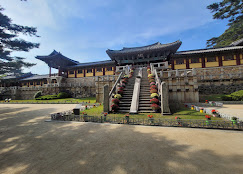
Important Days and Dates
While the temple is open year-round, these dates are particularly significant:
- Buddha’s Birthday (Seokga Tansinil): Usually in May (the 8th day of the 4th lunar month). The temple is decorated with thousands of colorful lotus lanterns, and special grand rituals are held.
- The Autumn Season (October – November): While not a single “day,” this is the most important time for pilgrims and tourists due to the stunning autumn foliage, which symbolizes the transitory nature of life in Buddhist philosophy.
- New Year’s Day (Solar and Lunar): Many locals visit at dawn to offer prayers for the coming year.
How to Reach
Gyeongju does not have an international airport. You must first fly into South Korea (Incheon/Seoul or Busan).
From Delhi to Bulguksa Temple
- Flight: Fly from Indira Gandhi International Airport (DEL) to Incheon International Airport (ICN) or Gimhae International Airport (Busan – PUS).
- Local Transfer: From Singyeongju Station, take Bus No. 700 or a taxi directly to the temple.
- From Incheon/Seoul: Take the KTX (high-speed train) from Seoul Station to Singyeongju Station (approx. 2 hours).
From Ahmedabad to Bulguksa Temple
- Flight: There are no direct flights. Fly from Ahmedabad (AMD) to Incheon (ICN) via a hub like Singapore, Ho Chi Minh City, or Bangkok.
- Alternative (via Busan): It is often faster to fly to Gimhae International Airport (Busan).
- From Busan: Take a limousine bus from the airport to Gyeongju Intercity Bus Terminal (approx. 1 hour).
- Local Transfer: From the Gyeongju terminal, take Bus No. 10 or 11 to reach the temple entrance.
History of the Temple
Origins: Originally founded in 528 CE during the Silla Dynasty under King Beopheung.
The Masterpiece: The current grand structure was redesigned and rebuilt starting in 751 CE by Prime Minister Kim Dae-seong. Legend says he built Bulguksa for his parents in his current life and the nearby Seokguram Grotto for his parents from a past life.
Destruction & Rebirth: Most of the wooden structures were burned down during the Japanese invasions (1593). The stone foundations, bridges, and pagodas are original from the 8th century, while the wooden halls were meticulously restored in the 1970s.
Symbolism: The architecture represents the transition from the earthly world to the Pure Land of Buddha via symbolic stone bridges (Blue Cloud and White Cloud bridges).
In Korean Buddhism, “Pooja” is referred to as Yebul (Buddhist Ceremony).
- Sa-si-ma-ji (Main Offering) The most important daily service held at 10:00 AM. It involves food offerings to the Buddha and symbolizes providing a meal to the Great Teacher.
- Yebul (Morning & Evening) Performed at dawn (~4:00 AM) and sunset. It involves chanting and prostrations to pay respects to the Buddha, the Dharma, and the Sangha.
- 108 Prostrations A practice of bowing 108 times to repent for the 108 worldly delusions. This is a core part of the “Templestay” experience for visitors.
- Circumambulation Devotees walk around the Dabotap and Seokgatap pagodas while chanting or praying for good fortune.
Attire (Dressing Guidelines)
Bulguksa is a holy site and a working monastery.
- Men: Shoulders and knees must be covered. Avoid sleeveless tops, short skirts, or ripped jeans.
- Women: Shoulders and knees must be covered. Avoid sleeveless tops, short skirts, or ripped jeans.
- Restrictions: Hats should be removed inside the halls. Avoid loud patterns or clothing with offensive text. If participating in a “Templestay” program, the temple usually provides a uniform (vest and loose pants).
- Footwear: You will need to remove your shoes before entering any of the wooden halls (Daeungjeon, etc.). It is highly recommended to wear clean socks.
Official Websites
- Temple Official Website:
- Government/Tourism Link:
- UNESCO World Heritage:
https://www.gyeongju.go.kr/tour/eng/index.do
Description
Important Days and Dates
While the temple is open year-round, these dates are particularly significant:
- Buddha’s Birthday (Seokga Tansinil): Usually in May (the 8th day of the 4th lunar month). The temple is decorated with thousands of colorful lotus lanterns, and special grand rituals are held.
- The Autumn Season (October – November): While not a single “day,” this is the most important time for pilgrims and tourists due to the stunning autumn foliage, which symbolizes the transitory nature of life in Buddhist philosophy.
- New Year’s Day (Solar and Lunar): Many locals visit at dawn to offer prayers for the coming year.
How to Reach
Gyeongju does not have an international airport. You must first fly into South Korea (Incheon/Seoul or Busan).
From Delhi to Bulguksa Temple
- Flight: Fly from Indira Gandhi International Airport (DEL) to Incheon International Airport (ICN) or Gimhae International Airport (Busan – PUS).
- Local Transfer: From Singyeongju Station, take Bus No. 700 or a taxi directly to the temple.
- From Incheon/Seoul: Take the KTX (high-speed train) from Seoul Station to Singyeongju Station (approx. 2 hours).
From Ahmedabad to Bulguksa Temple
- Flight: There are no direct flights. Fly from Ahmedabad (AMD) to Incheon (ICN) via a hub like Singapore, Ho Chi Minh City, or Bangkok.
- Alternative (via Busan): It is often faster to fly to Gimhae International Airport (Busan).
- From Busan: Take a limousine bus from the airport to Gyeongju Intercity Bus Terminal (approx. 1 hour).
- Local Transfer: From the Gyeongju terminal, take Bus No. 10 or 11 to reach the temple entrance.
History of the Temple
Origins: Originally founded in 528 CE during the Silla Dynasty under King Beopheung.
The Masterpiece: The current grand structure was redesigned and rebuilt starting in 751 CE by Prime Minister Kim Dae-seong. Legend says he built Bulguksa for his parents in his current life and the nearby Seokguram Grotto for his parents from a past life.
Destruction & Rebirth: Most of the wooden structures were burned down during the Japanese invasions (1593). The stone foundations, bridges, and pagodas are original from the 8th century, while the wooden halls were meticulously restored in the 1970s.
Symbolism: The architecture represents the transition from the earthly world to the Pure Land of Buddha via symbolic stone bridges (Blue Cloud and White Cloud bridges).
In Korean Buddhism, “Pooja” is referred to as Yebul (Buddhist Ceremony).
- Sa-si-ma-ji (Main Offering) The most important daily service held at 10:00 AM. It involves food offerings to the Buddha and symbolizes providing a meal to the Great Teacher.
- Yebul (Morning & Evening) Performed at dawn (~4:00 AM) and sunset. It involves chanting and prostrations to pay respects to the Buddha, the Dharma, and the Sangha.
- 108 Prostrations A practice of bowing 108 times to repent for the 108 worldly delusions. This is a core part of the “Templestay” experience for visitors.
- Circumambulation Devotees walk around the Dabotap and Seokgatap pagodas while chanting or praying for good fortune.
Attire (Dressing Guidelines)
Bulguksa is a holy site and a working monastery.
- Men: Shoulders and knees must be covered. Avoid sleeveless tops, short skirts, or ripped jeans.
- Women: Shoulders and knees must be covered. Avoid sleeveless tops, short skirts, or ripped jeans.
- Restrictions: Hats should be removed inside the halls. Avoid loud patterns or clothing with offensive text. If participating in a “Templestay” program, the temple usually provides a uniform (vest and loose pants).
- Footwear: You will need to remove your shoes before entering any of the wooden halls (Daeungjeon, etc.). It is highly recommended to wear clean socks.
Official Websites
- Temple Official Website:
- Government/Tourism Link:
- UNESCO World Heritage:
https://www.gyeongju.go.kr/tour/eng/index.do