
 January 27, 2026
Important Days and Dates
The temple follows the Hindu lunar calendar for its primary celebrations:
- Chaitra Navratri & Sharad Navratri: These nine nights are the most significant. Special Havan and Aarti are performed.
- Poonam (Full Moon Day): Every full moon is considered auspicious; many devotees observe a fast and visit the temple.
- Tuesday and Sunday: These days are specifically dedicated to Chehar Maa, often involving special Bhajan sessions.
- Meldino Janmotsav: Celebrating the appearance day of the Goddess.
How to Reach
Since Jaipur is a major transit hub, reaching a local shrine or traveling to the main pilgrimage sites from Jaipur is straightforward.
From Delhi to the Temple
- By Air: Fly from Indira Gandhi International Airport (DEL) to Jaipur International Airport (JAI). From the airport, use local taxis or auto-rickshaws to reach the specific locality in Jaipur.
- By Train: Several express trains like the Ajmer Shatabdi or Double Decker run daily from New Delhi (NDLS) to Jaipur (JP).
- By Road: A 5-6 hour drive via the NH48 (Delhi-Jaipur Highway).
From Ahmedabad to the Temple
- By Air: Direct flights are available from Sardar Vallabhbhai Patel International Airport (AMD) to Jaipur (JAI).
- By Train: Trains like the Adi SJ Rajdhani or Ashram Express connect Ahmedabad to Jaipur.
- By Road: Approximately 650 km via NH48, taking about 10-12 hours.
History of the Temple
Chehar Maa is considered an incarnation of Shakti. According to legend:
Origin: The Goddess is famously associated with the village of Martoli. It is said she appeared to a devotee named Bharnama and later established her presence there.
The Name “Chehar”: Legend suggests the name is derived from her ability to provide “Chehra” (a face/identity) or joy to her devotees. She is often called Kesar Bhavani.
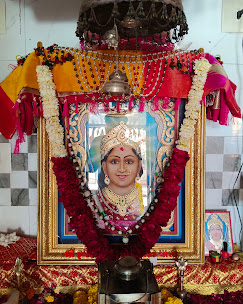
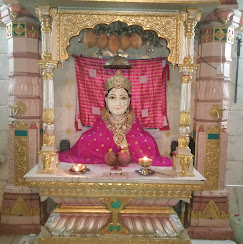
Significance: She is worshipped as a protective mother figure who removes obstacles and fulfills the wishes of those who pray with a pure heart. Her iconography usually depicts her with a lion, similar to Goddess Durga.
Main Poojas Performed
In any temple dedicated to Chehar Maa, the rituals focus on her form as a protective Mother Goddess.
-
- Maha Aarti: The primary ritual performed twice daily (Sunrise and Sunset). It involves the lighting of large lamps and the chanting of “Chehar Maa ni Aarti.”
- Navratri Pujan: The most significant worship occurs during the two annual Navratris. This includes Ghatasthapana (installing the sacred pot) and special offerings of Sringar (clothing and jewelry) to the deity.
- Thaal Offering: A ritual where a variety of vegetarian dishes and sweets are offered to the Goddess as Bhog, which is later distributed as Prasad.
- Morning: 6:00 AM – 12:00 PM
- Evening: 4:00 PM – 9:00 PM
Attire (Dressing Guidelines) for Pooja
While Jaipur temples are generally welcoming, traditional modesty is expected to maintain the sanctity of the shrine
Men:
-
- Recommended to wear traditional Indian attire like Kurta-Pyjama or Dhoti. Avoid wearing shorts or sleeveless shirts.
Women:
-
- Recommended to wear Saree, Salwar Kameez, or Lehenga Choli. It is customary to cover the head with a Dupatta or the end of a Saree during Aarti.
General:
-
- General Restrictions: Leather items (belts, wallets) and footwear must be removed before entering the inner sanctum.
Because Chehar Maa is a regional deity with many local shrines rather than a single government-managed complex in Jaipur, there is no specific “Jaipur Chehar Maa” government link.
Official Websites
Primary Temple (Martoli, Gujarat):
No Available
Government/Tourism Info:
https://devasthan.rajasthan.gov.in/
Description
Important Days and Dates
The temple follows the Hindu lunar calendar for its primary celebrations:
- Chaitra Navratri & Sharad Navratri: These nine nights are the most significant. Special Havan and Aarti are performed.
- Poonam (Full Moon Day): Every full moon is considered auspicious; many devotees observe a fast and visit the temple.
- Tuesday and Sunday: These days are specifically dedicated to Chehar Maa, often involving special Bhajan sessions.
- Meldino Janmotsav: Celebrating the appearance day of the Goddess.
How to Reach
Since Jaipur is a major transit hub, reaching a local shrine or traveling to the main pilgrimage sites from Jaipur is straightforward.
From Delhi to the Temple
- By Air: Fly from Indira Gandhi International Airport (DEL) to Jaipur International Airport (JAI). From the airport, use local taxis or auto-rickshaws to reach the specific locality in Jaipur.
- By Train: Several express trains like the Ajmer Shatabdi or Double Decker run daily from New Delhi (NDLS) to Jaipur (JP).
- By Road: A 5-6 hour drive via the NH48 (Delhi-Jaipur Highway).
From Ahmedabad to the Temple
- By Air: Direct flights are available from Sardar Vallabhbhai Patel International Airport (AMD) to Jaipur (JAI).
- By Train: Trains like the Adi SJ Rajdhani or Ashram Express connect Ahmedabad to Jaipur.
- By Road: Approximately 650 km via NH48, taking about 10-12 hours.
History of the Temple
Chehar Maa is considered an incarnation of Shakti. According to legend:
Origin: The Goddess is famously associated with the village of Martoli. It is said she appeared to a devotee named Bharnama and later established her presence there.
The Name “Chehar”: Legend suggests the name is derived from her ability to provide “Chehra” (a face/identity) or joy to her devotees. She is often called Kesar Bhavani.
Significance: She is worshipped as a protective mother figure who removes obstacles and fulfills the wishes of those who pray with a pure heart. Her iconography usually depicts her with a lion, similar to Goddess Durga.
Main Poojas Performed
In any temple dedicated to Chehar Maa, the rituals focus on her form as a protective Mother Goddess.
-
- Maha Aarti: The primary ritual performed twice daily (Sunrise and Sunset). It involves the lighting of large lamps and the chanting of “Chehar Maa ni Aarti.”
- Navratri Pujan: The most significant worship occurs during the two annual Navratris. This includes Ghatasthapana (installing the sacred pot) and special offerings of Sringar (clothing and jewelry) to the deity.
- Thaal Offering: A ritual where a variety of vegetarian dishes and sweets are offered to the Goddess as Bhog, which is later distributed as Prasad.
- Morning: 6:00 AM – 12:00 PM
- Evening: 4:00 PM – 9:00 PM
Attire (Dressing Guidelines) for Pooja
While Jaipur temples are generally welcoming, traditional modesty is expected to maintain the sanctity of the shrine
Men:
-
- Recommended to wear traditional Indian attire like Kurta-Pyjama or Dhoti. Avoid wearing shorts or sleeveless shirts.
Women:
-
- Recommended to wear Saree, Salwar Kameez, or Lehenga Choli. It is customary to cover the head with a Dupatta or the end of a Saree during Aarti.
General:
-
- General Restrictions: Leather items (belts, wallets) and footwear must be removed before entering the inner sanctum.
Because Chehar Maa is a regional deity with many local shrines rather than a single government-managed complex in Jaipur, there is no specific “Jaipur Chehar Maa” government link.
Official Websites
Primary Temple (Martoli, Gujarat):
No Available
Government/Tourism Info:
https://devasthan.rajasthan.gov.in/