Balarama – Vishnu Bhagwan Avatar History
Balarama, also known as Balram or Baladeva, is regarded as an avatar of Lord Vishnu in
many Vaishnava traditions.
In several Dashavatara lists, Balarama is considered the 8th avatar of Vishnu, replacing
Buddha in some regional beliefs.
Birth and Origin
Balarama was born to Rohini and Vasudeva. He is the elder brother of Lord Krishna.
According to scriptures,
Balarama is an incarnation of Ananta Shesha, the divine serpent on whom Lord Vishnu
rests.
He was transferred from Devaki’s womb to Rohini’s womb by divine intervention to protect
him from King Kansa.
Role and Significance
Balarama represents strength, discipline, agriculture, and moral duty (Dharma).
He played a vital role in Krishna’s life as a guide, protector, and teacher.
Balarama taught both Krishna and Sudama the art of warfare under Guru Sandipani.
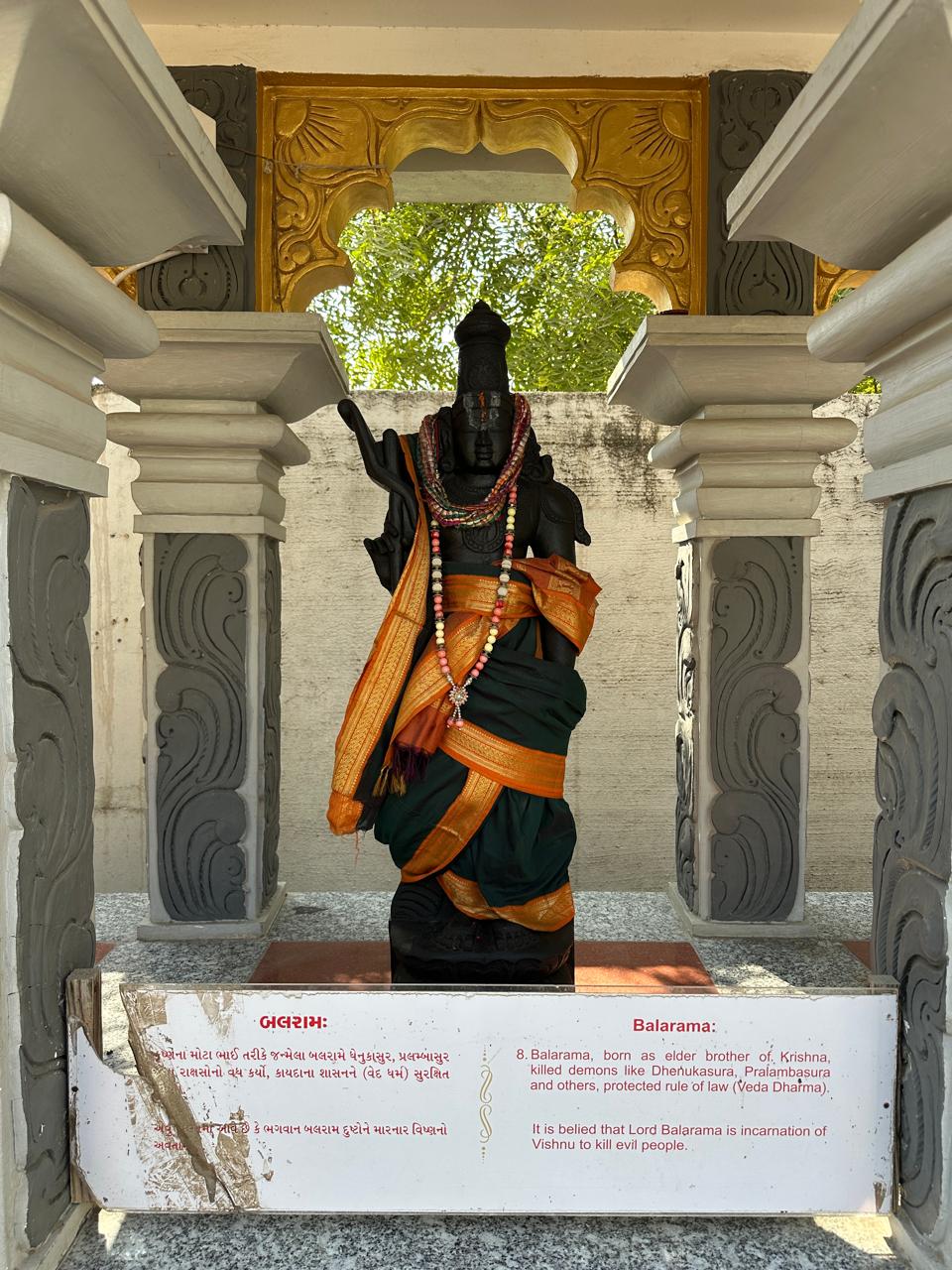
Weapons and Symbols
Balarama’s primary weapons are the Hala (plough) and Gada (mace).
The plough symbolizes farming and nourishment, while the mace represents power and
righteousness.
Religious Importance
Balarama is worshipped especially in regions like Mathura, Vrindavan, Odisha, and parts of
South India.
He is also revered in Jain and Buddhist traditions in different forms.
Avatar Position
In Vaishnava belief systems, the Dashavatara sequence includes:
1. Matsya
2. Kurma
3. Varaha
4. Narasimha
5. Vamana
6. Parashurama
7. Rama
8. Balarama
9. Krishna
10. Kalki
Conclusion
Balarama Avatar highlights the importance of strength guided by wisdom and humility.
As an avatar of Vishnu, Balarama upholds Dharma and supports divine balance in the
universe.