
 December 26, 2025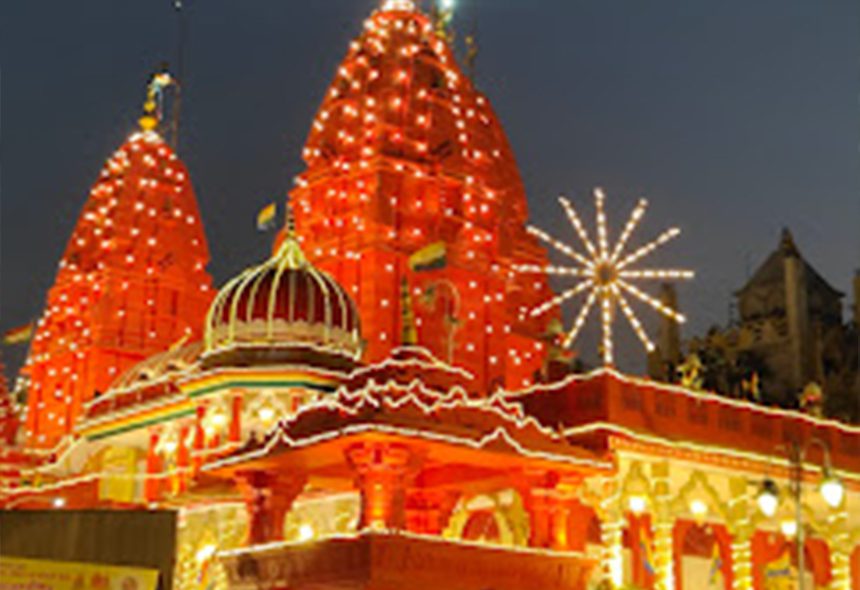
Important Days and Dates
- Paryushan Parva – Usually observed in August or September.
- Mahavir Jayanti – Celebrated in March or April.
- Diwali – Marked as the Nirvan Kalyanak of Lord Mahavira.
- Kartik Purnima – Considered an auspicious day for Jain devotees.
- Monthly religious rituals and special pujas on Jain festival days.
How to Reach
Delhi – To – Lal Mandir (Shri Digambar Jain Lal Mandir):
- By Metro: The nearest metro station is Chandni Chowk Metro Station (Yellow Line), located at a walking distance from the temple.
- By Road: Chandni Chowk is well connected by local buses, auto-rickshaws, and taxis.
- By Rail: Old Delhi Railway Station is about 2 km away.
- By Air: Indira Gandhi International Airport is around 20 km from the temple.
Ahmedabad – To – Lal Mandir (Shri Digambar Jain Lal Mandir):
- By Air: Direct flights are available from Ahmedabad to Delhi. From Delhi Airport, the temple can be reached by taxi or metro.
- By Train: Several express and superfast trains run from Ahmedabad Junction to New Delhi or Old Delhi Railway Station.
- By Road: Long-distance buses and private vehicles connect Ahmedabad to Delhi.
History of the Temple
Lal Mandir, officially known as Shri Digambar Jain Lal Mandir, is the oldest and most prominent Jain temple in Delhi. It is located opposite the Red Fort in the historic area of Chandni Chowk. The temple is believed to have been originally established in the 17th century during the reign of Mughal Emperor Shah Jahan, when Jain merchants serving in the Mughal army were permitted to build a small shrine.
Over time, the temple was expanded and renovated by the Jain community. The striking red sandstone structure gave the temple its popular name, ‘Lal Mandir’. The temple is dedicated to Lord Parshvanath, the 23rd Tirthankara of Jainism. It houses beautifully carved idols and represents classic Digambar Jain architecture.
Adjacent to the temple is the famous Jain Birds Hospital (Jain Shwetambar Lal Mandir Charitable Bird Hospital), which reflects the Jain principle of compassion towards all living beings. Lal Mandir remains a significant religious and cultural center for Jain devotees and visitors from across India and the world.
Description
Important Days and Dates
- Paryushan Parva – Usually observed in August or September.
- Mahavir Jayanti – Celebrated in March or April.
- Diwali – Marked as the Nirvan Kalyanak of Lord Mahavira.
- Kartik Purnima – Considered an auspicious day for Jain devotees.
- Monthly religious rituals and special pujas on Jain festival days.
How to Reach
Delhi – To – Lal Mandir (Shri Digambar Jain Lal Mandir):
- By Metro: The nearest metro station is Chandni Chowk Metro Station (Yellow Line), located at a walking distance from the temple.
- By Road: Chandni Chowk is well connected by local buses, auto-rickshaws, and taxis.
- By Rail: Old Delhi Railway Station is about 2 km away.
- By Air: Indira Gandhi International Airport is around 20 km from the temple.
Ahmedabad – To – Lal Mandir (Shri Digambar Jain Lal Mandir):
- By Air: Direct flights are available from Ahmedabad to Delhi. From Delhi Airport, the temple can be reached by taxi or metro.
- By Train: Several express and superfast trains run from Ahmedabad Junction to New Delhi or Old Delhi Railway Station.
- By Road: Long-distance buses and private vehicles connect Ahmedabad to Delhi.
History of the Temple
Lal Mandir, officially known as Shri Digambar Jain Lal Mandir, is the oldest and most prominent Jain temple in Delhi. It is located opposite the Red Fort in the historic area of Chandni Chowk. The temple is believed to have been originally established in the 17th century during the reign of Mughal Emperor Shah Jahan, when Jain merchants serving in the Mughal army were permitted to build a small shrine.
Over time, the temple was expanded and renovated by the Jain community. The striking red sandstone structure gave the temple its popular name, ‘Lal Mandir’. The temple is dedicated to Lord Parshvanath, the 23rd Tirthankara of Jainism. It houses beautifully carved idols and represents classic Digambar Jain architecture.
Adjacent to the temple is the famous Jain Birds Hospital (Jain Shwetambar Lal Mandir Charitable Bird Hospital), which reflects the Jain principle of compassion towards all living beings. Lal Mandir remains a significant religious and cultural center for Jain devotees and visitors from across India and the world.